10 Best World History Books

Essential Reads for Understanding Global Civilization and Human Progress

Discover the most influential and enlightening world history books that trace humanity's journey across continents and centuries. From the origins of civilization to modern geopolitics, these essential works explore the forces that shaped our world, the decisions that defined civilizations, and the connections that bind us together. Each book offers unique perspectives on how geography, innovation, culture, and choice have molded the human experience.

01

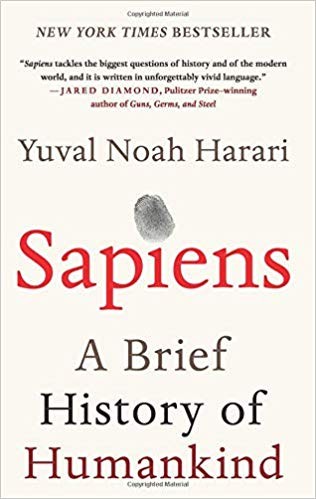
Sapiens: A Brief History of Humankind

by Yuval Noah Harari

View on Amazon →

"Homo sapiens rules the world because it is the only animal that can cooperate flexibly in large numbers."

Spanning 70,000 years from the emergence of Homo sapiens to the present day, Sapiens explores how a single species came to dominate the world. Harari examines three major revolutions—the Cognitive, Agricultural, and Scientific—that transformed human societies and enabled a single species to rule the globe. Through captivating storytelling and bold arguments, Harari challenges conventional wisdom about human nature, progress, and meaning.

Sapiens provides an unprecedented grand narrative of human history, synthesizing insights from biology, anthropology, history, and philosophy to explain how Homo sapiens achieved global dominance. It challenges readers to question fundamental assumptions about progress, happiness, and human nature while offering a framework for understanding our past and imagining our future. The book's ability to connect personal human experiences with sweeping historical forces makes it essential for anyone seeking to understand our shared human story.

  • The Cognitive Revolution allowed humans to imagine shared realities and cooperate in large groups
  • The Agricultural Revolution was paradoxically a major setback for human wellness despite enabling civilization
  • Imagined orders like religions, nations, and capitalism are humanity's most powerful tools but also sources of conflict
  • The Scientific Revolution marked humanity's shift from understanding the world to changing it
  • Some scholars argue the book oversimplifies complex historical processes and makes unsourced assertions
  • Historians note that the book prioritizes grand narrative over empirical evidence in several key arguments
  • Critics contend that the anthropological and archaeological sections contain inaccuracies and interpretative leaps

"A fascinating and provocative look at how humans came to dominate the world."

Bill Gates, Microsoft Founder & Philanthropist

"A stimulating read that challenges conventional thinking about human history and civilization."

Barack Obama, Former U.S. President

"An original and thought-provoking synthesis of history and science."

Jared Diamond, Author & UCLA Geographer
02

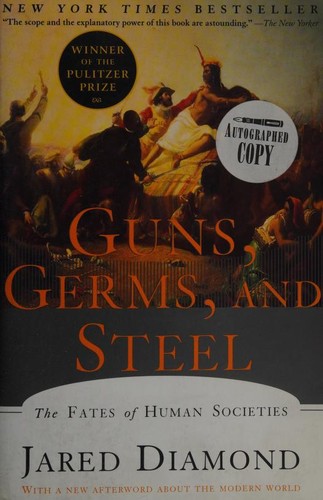
Guns, Germs, and Steel: The Fates of Human Societies

by Jared Diamond

View on Amazon →

"Geography deals out these immutable cards—but the way a society plays its hand is not entirely determined by the cards."

This groundbreaking work explains why some societies developed advanced technology and conquered others, while some remained relatively isolated. Diamond argues that geographical factors—not racial or cultural superiority—determined which societies accumulated power and weapons. By examining how continents' geography, climate, and available crops and animals influenced human development, Diamond presents a revolutionary perspective on inequality and historical progress.

Guns, Germs, and Steel fundamentally reshapes how we understand global inequality by replacing racial and cultural determinism with geographic and environmental explanation. The book's systematic examination of how geography shaped the divergent destinies of civilizations provides crucial context for understanding the modern world. Its Pulitzer Prize-winning analysis offers essential reading for anyone seeking to understand why nations developed differently and how historical accidents of geography continue to influence global power dynamics.

  • Geography and biogeography—continent size, axis orientation, and available plant and animal species—were the primary determinants of societal development
  • The east-west axis of Eurasia allowed rapid spread of technologies and crops, giving it developmental advantages over other continents
  • Domesticable animals and crops were unevenly distributed globally, affecting which societies could support dense populations and complex organization
  • Environmental advantages compound over time through positive feedback loops, explaining persistent global inequalities
  • Some historians argue that Diamond overstates geography's explanatory power at the expense of human agency and cultural factors
  • Critics contend that the deterministic framework may inadvertently support outdated ideas about inherent differences between peoples
  • Academic reviewers note selective use of evidence and some factual inaccuracies in regional examples

"A remarkably readable book that shows how history and biology can enrich one another to produce a deeper understanding of the human condition."

E.O. Wilson, Harvard Biologist & Pulitzer Prize Winner

"A book of remarkable scope...one of the most important and readable works on the human past published in recent years."

Colin Renfrew, Cambridge Archaeologist

"Fascinating exploration of how geography shaped human civilization and global inequality."

Bill Gates, Microsoft Founder & Philanthropist
03

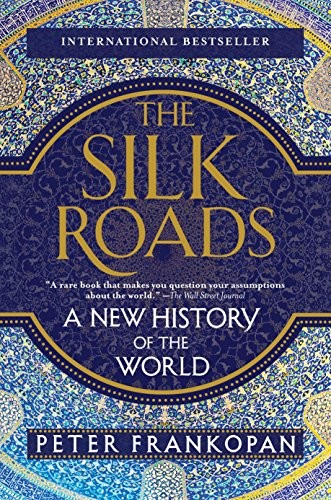
The Silk Roads: A New History of the World

by Peter Frankopan

View on Amazon →

"We think of globalisation as a uniquely modern phenomenon; yet 2,000 years ago too, it was a fact of life, one that presented opportunities, created problems and prompted technological developments."

Frankopan reframes world history by placing the Silk Roads—vast networks of trade routes connecting East and West—at the center of civilization's development. Rather than viewing history through a European lens, this work demonstrates how Central Asia, Mesopotamia, and the East were the true drivers of cultural, economic, and spiritual exchange for millennia. From antiquity through the modern era, Frankopan traces how goods, ideas, and religions flowed along these routes, reshaping the world.

The Silk Roads challenges Western-centric historical narratives and reveals the central importance of Asian trade networks to global development. Frankopan's sweeping geographical and chronological scope demonstrates how interconnectedness, not isolation, has characterized human history. This essential perspective helps modern readers understand global relationships, the roots of contemporary geopolitics, and why Central Asia and Eastern trade networks remain crucial to understanding our world.

  • The Silk Roads were not simply trade routes but vast networks of cultural, economic, religious, and intellectual exchange spanning over 2,000 years
  • Asia, particularly Central Asia and Mesopotamia, was the true center of world history, not Europe or the West
  • The movement of goods, religions, technologies, and ideas along these routes fundamentally shaped civilization and created the interconnected world we inhabit
  • Understanding the Silk Roads provides essential context for modern geopolitics and global relationships
  • Some scholars argue the book occasionally sacrifices historical precision for narrative sweep and readability
  • Critics note that the emphasis on trade routes may downplay internal societal developments and local agency
  • Academic reviewers suggest certain regional analyses could benefit from more specialized expertise

"History on a grand scale, with a sweep and ambition that is rare...a proper historical epic of dazzling range and achievement."

William Dalrymple, The Guardian Historian & Author

"Frankopan has created something that forces us to sit up and reconsider the world and the way we've always thought about it."

NPR, National Public Radio

"A rare book that makes you question your assumptions about the world."

The Wall Street Journal, Financial Publication
04

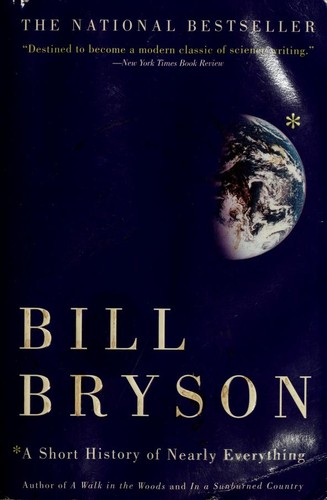
A Short History of Nearly Everything

by Bill Bryson

View on Amazon →

"If this book has a lesson, it is that we are awfully lucky to be here—and by 'we' I mean every living thing. To attain any kind of life in this universe of ours appears to be quite an achievement."

Bryson undertakes an ambitious quest to understand everything about our world—from the origins of the universe and the formation of the earth to the emergence of life and human civilization. With his characteristic wit and accessible prose, he explores how scientists discovered what we know about our planet, the cosmos, and ourselves. This sweeping narrative demonstrates both the wonder of creation and the often-comical mishaps that characterize scientific discovery.

A Short History of Nearly Everything makes scientific and historical knowledge accessible and entertaining, serving as a bridge between specialist knowledge and general readership. Bryson's ability to contextualize discoveries within compelling human stories helps readers understand not just what we know but how we came to know it. Essential for developing scientific literacy and understanding humanity's place in the cosmos, this book won major science writing awards for its ability to inspire wonder and understanding.

  • Scientific discovery is often characterized by mistakes, accidents, and serendipity rather than pure rational progress
  • Many fundamental discoveries about our world and universe occurred more recently than people typically realize
  • The sheer improbability of existence and the emergence of life and consciousness deserves more appreciation
  • Understanding science requires appreciating both the brilliance and humor of scientists and their discoveries
  • Some scientists note occasional inaccuracies or oversimplifications in specialized scientific sections
  • Critics argue the emphasis on entertaining narrative sometimes comes at the expense of complete technical accuracy
  • Some readers find the scope so vast that individual topics lack sufficient depth for serious study

"Destined to become a modern classic of science writing."

The New York Times, Major Newspaper

"Possibly the best scientific primer ever published."

The Economist, Economic & Political Magazine

"Truly impressive...It's hard to imagine a better rough guide to science."

The Guardian, British Newspaper
05

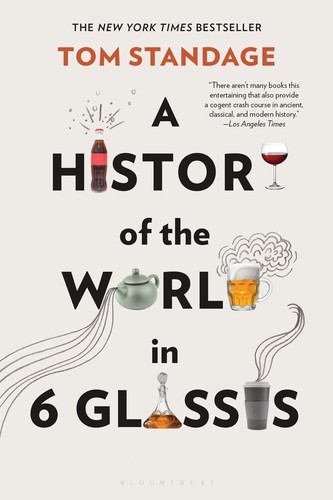
A History of the World in 6 Glasses

by Tom Standage

View on Amazon →

"The coffeehouse was the Internet of the Age of Reason."

Standage presents world history through an unexpected lens: the beverages that shaped civilization. From beer in ancient Mesopotamia and wine in ancient Greece to coffee during the Enlightenment, tea during the British Empire, spirits in the age of exploration, and Coca-Cola in the modern era, each beverage marked a pivotal historical period. Through this clever framework, Standage reveals how drinks influenced trade, culture, politics, and social organization across continents and centuries.

A History of the World in 6 Glasses demonstrates how everyday cultural objects connect to grand historical movements, making world history memorable and accessible. The book's unique approach reveals unexpected connections between consumption patterns, economics, and social change. By grounding history in tangible, relatable elements like beverages, Standage helps readers understand how ordinary human activities and preferences drive historical transformation, making this essential reading for understanding how history is made.

  • Beverages served as markers and drivers of historical periods, influencing trade, politics, and cultural development
  • Beer enabled agricultural civilization by providing reliable nutrition and demonstrating fermentation technology
  • Coffee and coffeehouses facilitated the Enlightenment and scientific revolution by creating spaces for intellectual exchange
  • Tea and cola represent imperial expansion, colonialism, and modern globalization through consumption patterns
  • Some historians argue the framework, while creative, occasionally forces historical narrative to fit the beverage theme
  • Critics contend that focusing on beverages may oversimplify the complex causes driving historical change
  • Academic reviewers note that some beverage-history connections are more tenuous than others

"Standage offers a novel and intriguing approach to world history through the lens of beverages and their cultural significance."

Kirkus Reviews, Book Review Publication

"A clever and engaging exploration that makes history both accessible and entertaining."

Publishers Weekly, Book Industry Magazine

"An innovative framework that reveals surprising connections between consumption and civilization."

Booklist, Library Journal
06

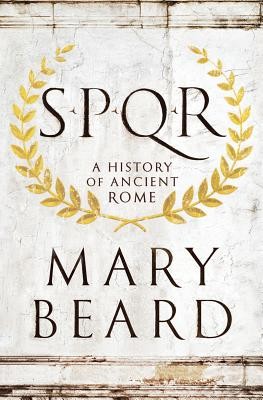
SPQR: A History of Ancient Rome

by Mary Beard

View on Amazon →

"Rome still helps to define the way we understand our world and think about ourselves, from high theory to low comedy. After 2,000 years, it continues to underpin Western culture and politics."

Mary Beard's monumental work spans 1,000 years of Roman history from the city's mythical founding through the collapse of the Western Empire. Beard moves beyond traditional narratives of emperors and generals to explore how ordinary Romans—slaves, women, soldiers, and citizens—experienced their world. Combining archaeological evidence with textual sources and modern scholarship, Beard presents Rome not as a timeless pinnacle but as a complex, evolving society that grappled with questions still relevant today.

SPQR reframes Roman history by centering the experiences of ordinary people and challenging romanticized visions of antiquity. Beard's scholarly expertise combined with accessible prose makes this an essential work for understanding how Rome's institutions, ideas, and conflicts shaped Western civilization. The book's careful attention to evidence and willingness to acknowledge historical uncertainties provides a model for rigorous historical thinking while revealing Rome's enduring influence on law, politics, language, and culture.

  • Roman society was far more diverse, complex, and dynamic than stereotypical portrayals suggest
  • The institution of Roman citizenship evolved over centuries and was fundamentally different from modern citizenship
  • Ordinary people—not just emperors and elites—shaped Roman history through their choices, conflicts, and adaptations
  • Roman ideas about power, law, citizenship, and governance continue to influence modern Western civilization
  • Some readers find the extensive scholarly apparatus and nuanced arguments occasionally difficult to follow
  • Critics note that the focus on ambiguity and complexity may frustrate readers seeking clear narrative conclusions
  • Academic specialists argue that certain regional developments could receive more detailed attention

"A landmark achievement in historical scholarship that revolutionizes how we understand ancient Rome and its legacy."

The New York Times, Major Newspaper

"Beard's erudition and storytelling combine to create a magnificent history that challenges every assumption about Rome."

The Guardian, British Newspaper

"A magisterial work that sets a new standard for historical writing and understanding the classical world."

Financial Times, Financial Publication
07

1491: New Revelations of the Americas Before Columbus

by Charles C. Mann

View on Amazon →

"In 1491 the Inka ruled the greatest empire on earth. Bigger than Ming Dynasty China, bigger than Ivan the Great's expanding Russia, bigger than Songhay in the Sahel...bigger than any European state."

Mann challenges conventional wisdom about pre-Columbian Americas by presenting evidence that indigenous civilizations were far more sophisticated, densely populated, and environmentally influential than previously understood. Drawing on recent archaeological, linguistic, and genetic research, Mann reveals thriving urban centers, extensive agricultural networks, and complex political systems. The book demonstrates that native peoples actively shaped their landscape for thousands of years and that Columbus's arrival represented not the discovery of an empty wilderness but the collision of two advanced civilizations.

1491 provides essential context for understanding American history by revealing the sophistication and agency of indigenous civilizations before European contact. Mann's meticulous research challenges the narrative of empty wilderness and passive indigenous peoples, demanding a fundamental revaluation of American history. Essential reading for understanding pre-Columbian achievements, the nature of European colonization, and the complex legacy of indigenous America, this book reshapes how we understand the Americas' place in world history.

  • Pre-Columbian Americas supported large, sophisticated civilizations with advanced agriculture, architecture, and governance systems
  • Indigenous peoples managed their environment actively, shaping landscapes for agriculture and resource management
  • The Americas were not sparsely populated wilderness but densely settled regions with complex political organizations
  • Understanding pre-Columbian civilizations requires acknowledging indigenous sophistication and agency
  • Some scholars argue that Mann occasionally overstates the evidence for indigenous environmental management and population estimates
  • Critics contend that emphasis on pre-Columbian achievements may inadvertently minimize the genuine transformations wrought by colonization
  • Academic reviewers note that certain archaeological interpretations remain contested and debated

"A remarkable achievement—deeply researched, clearly written, and revolutionary in its implications for understanding American history."

The New York Times, Major Newspaper

"Mann brilliantly reconstructs a world that has been almost completely lost from our collective memory."

NPR, National Public Radio

"A groundbreaking work that fundamentally alters how we understand the Americas before Columbus."

The Washington Post, American Newspaper
08

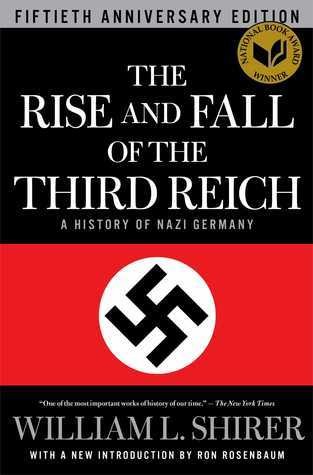
The Rise and Fall of the Third Reich: A History of Nazi Germany

by William L. Shirer

View on Amazon →

"The power which has always started the greatest religious and political avalanches in history rolling has from time immemorial been the magic power of the spoken word, and that alone."

Shirer's monumental work, based on his eyewitness accounts as a journalist in Berlin and massive archival research, provides the definitive history of Nazi Germany from its roots in Weimar society through World War II and the Holocaust. Drawing on Nazi documents, interviews, and firsthand observations, Shirer examines how the Nazis rose to power, consolidated control, waged war, and perpetrated genocide. This comprehensive work remains essential for understanding totalitarianism, propaganda, and the consequences of unchecked authoritarianism.

The Rise and Fall of the Third Reich is essential reading for understanding 20th-century history, totalitarianism, and the dangers of authoritarian politics. Shirer's combination of journalistic firsthand experience with meticulous historical research creates an authoritative account of how democracies can fail and how propaganda manipulates populations. The book's stark lessons about the fragility of democracy, the power of ideology, and the consequences of inaction remain vital for any citizen seeking to understand modern political threats and historical responsibility.

  • Nazi totalitarianism emerged from specific historical, economic, and political conditions in post-WWI Germany
  • Propaganda and manipulation of language were central to Nazi control and were far more powerful than often realized
  • Democratic institutions and political elites failed to resist authoritarianism due to miscalculation, complacency, and ideological divisions
  • The Holocaust was not an aberration but a logical outcome of Nazi ideology and systematic dehumanization
  • Some historians argue the book emphasizes individual leaders and decisions while underestimating structural factors
  • Critics contend that Shirer's analysis of working-class and ordinary German support for Nazism could be more nuanced
  • Academic reviewers note that post-1960s scholarship has challenged some of Shirer's interpretations

"A masterpiece of historical writing, essential for understanding the 20th century's greatest catastrophe."

The New York Times, Major Newspaper

"Shirer's magisterial work remains the standard account of how democracy can collapse into totalitarianism."

The Economist, Economic & Political Magazine

"The authoritative work on Nazi Germany, combining narrative power with historical authority."

Arthur Schlesinger Jr., Pulitzer Prize-Winning Historian
09

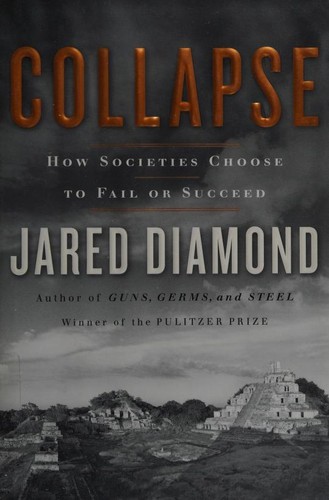
Collapse: How Societies Choose to Fail or Succeed

by Jared Diamond

View on Amazon →

"Past peoples were neither ignorant bad managers who deserved to be exterminated, nor all-knowing conscientious environmentalists. They were people like us, facing problems broadly similar to those that we now face."

Diamond examines the rise and fall of civilizations throughout history, from Easter Island to Greenland, the Maya to Japan, analyzing what causes some societies to collapse while others adapt and survive. By investigating environmental, political, cultural, and economic factors, Diamond demonstrates that collapse is not inevitable but results from the choices societies make about resource management, cultural values, and long-term planning. The book provides crucial lessons for modern civilization as it faces climate change, resource depletion, and environmental degradation.

Collapse provides essential frameworks for understanding civilizational success and failure, with urgent relevance to modern global challenges. Diamond's comparative analysis of societies across geography and time reveals patterns of environmental awareness, political will, and decision-making that determine civilizational outcomes. Critical for anyone concerned with sustainability, climate change, and long-term human survival, this book demonstrates that civilizations are not protected by superior technology or knowledge but by willingness to learn from the past and make difficult changes.

  • Environmental collapse occurs when societies fail to manage resources sustainably or respond to warning signs
  • Some societies successfully adapted to environmental challenges while others refused necessary changes
  • Globalization means modern civilization cannot collapse in isolation as ancient societies did, creating unprecedented shared risk
  • Critical choices about long-term planning, cultural flexibility, and willingness to change core values determine civilizational survival
  • Some scholars argue that Diamond overstates environmental determinism at the expense of other causal factors
  • Critics contend that case studies occasionally fit the collapse narrative at the expense of complexity and nuance
  • Academic reviewers note that some of Diamond's environmental interpretations remain contested

"Diamond provides indispensable lessons for our own civilization as it faces unprecedented challenges."

The New York Times, Major Newspaper

"A sobering and ultimately hopeful examination of how civilizations can learn from the past."

Bill Gates, Microsoft Founder & Philanthropist

"Essential reading for understanding why societies succeed or fail, with urgent relevance to modern environmental challenges."

The Economist, Economic & Political Magazine
10

The Story of Mankind

by Hendrik Willem van Loon

View on Amazon →

"The history of the world is the record of a man in quest of his daily bread and butter."

First published in 1921, van Loon's sweeping narrative traces human civilization from the earliest hunter-gatherers through the modern era. Written in accessible, engaging prose and illustrated with the author's own drawings, this pioneering work presents world history as a connected story of human achievement, struggle, and progress. Van Loon emphasizes the interconnectedness of cultures and the recurring patterns that underlie human history, making complex historical developments comprehensible and compelling to generations of readers.

The Story of Mankind is essential as a foundational text that shaped how world history is taught and understood. Van Loon's emphasis on interconnectedness and human agency provided an innovative framework for understanding history at the beginning of the 20th century that remains influential today. The book's accessible prose style and integrated illustrations created a model for popular history writing. Reading this classic provides insight into how historical perspectives have evolved and demonstrates the enduring power of narrative to help readers understand their place in history.

  • Human history can be understood as a connected narrative rather than isolated regional stories
  • Common patterns and recurring themes underlie historical development across different cultures and eras
  • Understanding history requires appreciating both human creativity and the constraints of geography and resources
  • Tolerance and knowledge-seeking are recent developments that remain fragile and require constant cultivation
  • Modern readers may find some historical interpretations dated or reflecting early 20th-century biases
  • Academic historians note that the narrative approach, while engaging, sometimes sacrifices accuracy for storytelling
  • Contemporary scholarship has challenged some of van Loon's historical conclusions and emphases

"A masterpiece of historical exposition that has shaped how generations understand their world."

The Saturday Review, Literary Magazine

"Van Loon's pioneering work demonstrated that history could be both scholarly and accessible, setting a standard for popular history."

The New York Times, Major Newspaper

"A foundational text that revolutionized how history is presented to general readers."

Time Magazine, News Magazine
Back to all lists