10 Best Writing Books

Essential Guides to Mastering the Craft of Writing

Explore the most influential and transformative writing books that have shaped authors, journalists, and writers worldwide. From Stephen King's candid memoir on craft to Anne Lamott's compassionate guidance, these ten essential volumes offer timeless wisdom, practical techniques, and inspiring perspectives on the art of writing. Whether you're a beginner seeking foundational skills or an experienced writer refining your craft, these books provide the tools, insights, and motivation needed to write better and more authentically.

01

On Writing: A Memoir of the Craft

by Stephen King

View on Amazon →

"If you want to be a writer, you must do two things above all others: read a lot and write a lot."

A candid, personal memoir that combines King's own journey as a writer with practical advice on the craft of writing. King draws from his decades of experience creating bestselling novels and shares the tools, techniques, and mindset necessary for writers to succeed. The book balances memoir with practical instruction, making it accessible to writers of all levels.

King's direct, conversational style demystifies the writing process and proves that good writing comes from reading widely and practicing consistently. His emphasis on story over mechanics and his honest account of overcoming obstacles make this essential for anyone serious about writing. The book has influenced an entire generation of writers and remains one of the most recommended guides on the craft.

  • Reading widely is as essential as writing daily for developing your craft
  • First drafts are about discovery; revision is where the real work happens
  • Write with the door closed, rewrite with the door open
  • Avoid adverbs and focus on strong verbs to create vigorous prose
  • Heavy focus on fiction writing with limited guidance for other genres
  • Some advice reflects King's personal style and may not apply universally
  • The memoir portions occasionally overshadow the instructional content

"Long live the King. A fun, incisive read that became one of TIME MAGAZINE'S TOP 100 NONFICTION BOOKS OF ALL TIME."

Entertainment Weekly, Major Media

"King moved from the supermarket rack to the pages of The Paris Review with this influential guide on the writer's craft."

The Paris Review, Literary Magazine
02

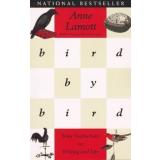
Bird by Bird: Some Instructions on Writing and Life

by Anne Lamott

View on Amazon →

"Almost all good writing begins with terrible first efforts. You need to start somewhere."

A warm, accessible guide that combines practical writing instruction with life wisdom and humor. Lamott shares personal anecdotes, exercises, and insights that help writers overcome self-doubt, perfectionism, and creative blocks. The book emphasizes the importance of authenticity, community, and embracing the messy reality of the writing process.

Lamott's compassionate approach makes writing feel achievable rather than intimidating, offering emotional support alongside technical guidance. Her central metaphor of taking things 'bird by bird' has resonated with millions of writers seeking to manage overwhelm. The book bridges the gap between craft instruction and the psychological aspects of writing, making it invaluable for writers struggling with confidence and perfectionism.

  • Break large projects into manageable pieces to overcome overwhelm
  • First drafts are meant to be terrible; perfection comes in revision
  • Write from emotional truth and vulnerability to create work that resonates
  • Community and support from other writers are essential to sustaining a writing practice
  • Some readers find the personal stories take up too much space
  • Less focus on technical grammar and syntax than other writing guides
  • The advice is sometimes abstract and requires self-directed application

"Superb writing advice that is hilarious, helpful, and provocative."

The New York Times Book Review, Major Media

"Bird by Bird is my go-to gift or recommendation for anyone interested in writing, though it is as much a treatise on life as it is a creative-writing primer."

Matt Haig, Bestselling Author
03

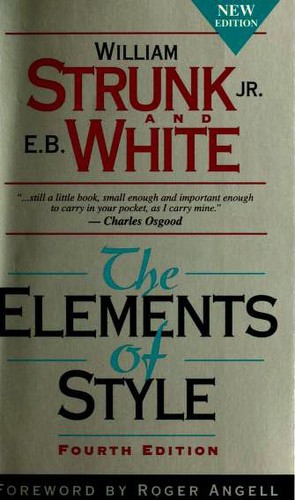
The Elements of Style

by William Strunk Jr. and E.B. White

View on Amazon →

"Vigorous writing is concise. A sentence should contain no unnecessary words, a paragraph no unnecessary sentences, for the same reason that a drawing should have no unnecessary lines and a machine no unnecessary parts."

A compact, practical guide that outlines the fundamental principles of English grammar, style, and composition. Originally published in 1918 and revised by E.B. White in 1959, this slim volume has become the gold standard for clear, concise writing. It focuses on eliminating unnecessary words and adhering to essential rules that strengthen prose.

This book is foundational for any writer seeking to master clear, direct communication. Its most famous rule, 'Omit needless words,' encapsulates a philosophy that has influenced decades of writers across all genres. The book's brevity and precision demonstrate its core principles, making it both instructional and exemplary. It remains the most frequently assigned text in academic syllabuses globally.

  • Eliminate needless words to create vigorous, clear prose
  • Prefer the specific to the general, the definite to the vague, the concrete to the abstract
  • Place yourself in the background of your writing and let the subject command attention
  • Use the active voice and avoid unnecessary tense shifts to maintain clarity
  • Some rules feel outdated in contemporary writing contexts
  • Limited guidance on creative or experimental writing approaches
  • The book's brevity leaves many topics unexplored in depth

"If you have any young friends who aspire to become writers, the second-greatest favor you can do them is to present them with copies of The Elements of Style."

Dorothy Parker, Legendary Writer

"Follow the rules and apply the principles in that book. I try not to deviate from them."

General David Petraeus, Military Leadership
04

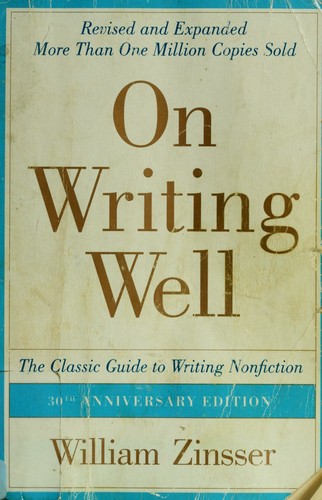
On Writing Well: The Classic Guide to Writing Nonfiction

by William Zinsser

View on Amazon →

"Rewriting is the essence of writing well: it's where the game is won or lost."

A comprehensive guide to writing clear, engaging nonfiction across all forms including journalism, essays, memoirs, and business writing. Zinsser emphasizes the importance of clarity, simplicity, and authenticity, arguing that good writing requires hard work, revision, and attention to the reader's experience. The book covers everything from structure and voice to the writer's relationship with their subject.

Zinsser's philosophy that writing is fundamentally about clarity and serving the reader has shaped generations of journalists and nonfiction writers. His insistence that 'the secret of good writing is to strip every sentence to its cleanest components' provides actionable guidance applicable across all nonfiction forms. With over a million copies sold since 1976, this book has proven its lasting relevance and practical value.

  • Clarity and simplicity are more valuable than impressive vocabulary
  • Revision is where good writing happens, not in the first draft
  • Know your subject deeply and choose a clear point for every piece
  • Write with your voice and personality, not an artificial or stilted tone
  • Focuses primarily on nonfiction, limiting applicability for fiction writers
  • Some examples and references feel dated
  • The emphasis on journalistic clarity may not suit all nonfiction subgenres

"A foundational text praised for decades by journalists, teachers, writers, and students since its publication in 1976."

Journalists and Writing Educators Worldwide, Writing Community

"A definitive guide to writing nonfiction that treats storytelling with the rigor and care it deserves."

The New York Herald Tribune, Major Newspaper
05

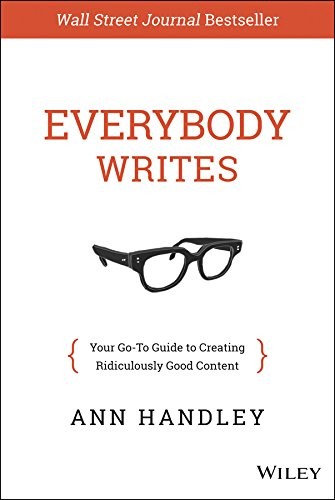
Everybody Writes: Your Go-To Guide to Creating Ridiculously Good Content

by Ann Handley

View on Amazon →

"The truth is this: writing well is part habit, part knowledge of some fundamental rules, and part giving a damn."

A practical guide to writing effective content for the digital age, covering everything from social media to email to web copy. Handley emphasizes that good writing serves the reader, not the writer, and provides frameworks, templates, and examples for creating content that engages and converts. The book demonstrates that writing well is a combination of habit, knowledge of rules, and caring about your audience.

In an era when everyone is a content creator, Handley's book provides essential guidance for writing that works across digital platforms. Her philosophy that 'good writing anticipates the questions that readers might have and answers them' applies universally to modern writing. The book's emphasis on audience-centered writing and practical examples make it invaluable for anyone creating content professionally.

  • Write for your reader, not for yourself, by understanding their needs and questions
  • Useful writing is more important than impressive writing in content creation
  • Develop consistent writing habits and understand basic rules before breaking them
  • Clear, conversational language is more effective than jargon and corporate speak
  • Heavily focused on marketing and business writing contexts
  • Some examples favor commercial over literary writing styles
  • Limited depth on certain technical writing aspects

"Who better to teach you the craft of commercial and professional writing than Ann Handley."

Seth Godin, Marketing and Writing Authority

"Absolutely indispensable!"

Jay Baer, Content Strategy Expert
06

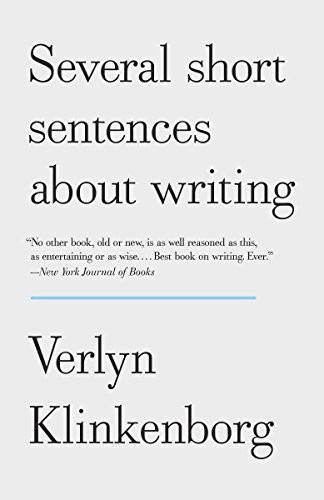
Several Short Sentences About Writing

by Verlyn Klinkenborg

View on Amazon →

"Most of what you think you know about writing is useless. It's the harmful debris of your education—a mixture of half-truths, myths, and false assumptions that prevents you from writing well."

A distinctive and philosophical guide that challenges conventional wisdom about writing. Klinkenborg argues that most received knowledge about writing is an obstacle to good writing and helps readers unlearn misconceptions about genius, creativity, and writer's block. The book focuses on understanding where sentences come from and what gives them vitality and authenticity.

Klinkenborg offers a radically different perspective on the writing craft, questioning established rules while providing grounded, practical guidance. His focus on the sentence as the fundamental unit of writing, and his emphasis on developing genuine understanding through close attention and revision, provides insights unavailable in other guides. The book is particularly valuable for writers seeking to break free from conventional constraints.

  • Unlearn conventional writing rules that actually prevent good writing
  • Develop genuine understanding through observation, thinking, and noticing
  • Revision is the key to discovering whether sentences are worth keeping
  • Authenticity and vitality in sentences come from deep engagement with your subject
  • The philosophical approach may feel abstract to readers wanting concrete rules
  • Limited examples of finished prose to illustrate principles
  • Some writers may find the rejection of conventional wisdom confusing

"No other book, old or new, is as well reasoned as this, as entertaining or as wise."

Booklist, American Library Association

"None to compare to this one for understanding where sentences come from in the first place, where their vitality is found, and what distinguishes their energy, their authenticity, and their prospects for life after birth."

Tom McGuane, Acclaimed Author
07

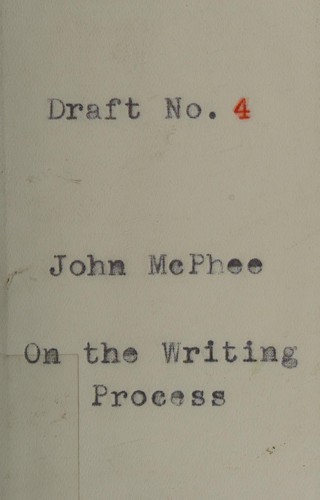
Draft No. 4: On the Writing Process

by John McPhee

View on Amazon →

"A piece of writing has to start somewhere, go somewhere, and sit down when it gets there."

A collection of eight essays offering an intimate look at John McPhee's writing process and philosophy. Through examples from his own work, McPhee discusses structure, leads, endings, revision, and the relationships between writers and their subjects. The book serves as both a masterclass in the craft and an inspiring account of how a legendary writer approaches his work.

McPhee is considered one of the greatest nonfiction writers of our time, and this book provides unprecedented access to his methods and thinking. His emphasis on thorough reporting, careful structure, and meticulous revision offers lessons applicable across genres. The book's focus on how great writers actually work, rather than abstract principles, makes it invaluable for serious writers seeking to understand craft at the highest level.

  • The lead is a promise that establishes the tone and direction of a piece
  • Thorough reporting and research are the foundation of strong writing
  • Structure must serve the subject and the story you're telling
  • Writers compete only with themselves; focus on developing your unique voice
  • Assumes readers have familiarity with McPhee's work and writing world
  • Some essays are highly specific to nonfiction journalism
  • Limited guidance for fiction writers

"He has been for dozens and dozens of nonfiction writers what Robert Lowell used to be for poets and poet wannabes of a certain age: the model."

David Remnick, Editor, The New Yorker

"Interspersed with observations every writer should remember. The last three chapters will be assigned and reassigned by grateful writing teachers."

Corby Kummer, New York Times Book Review
08

Save the Cat!: The Last Book on Screenwriting You'll Ever Need

by Blake Snyder

View on Amazon →

"Because liking the person we go on a journey with is the single most important element in drawing us into the story."

A revolutionary guide to screenwriting that introduces the Blake Snyder Beat Sheet, a structure for breaking down stories into fifteen key plot points. Though focused on screenwriting, the book's principles apply to all storytelling, offering a clear framework for understanding narrative structure, character development, and audience engagement. Snyder's approach combines classic three-act structure with specific, actionable beats.

The Blake Snyder Beat Sheet has become an industry standard used by screenwriters, producers, development executives, and authors across all genres. While designed for screenwriting, the book's structural insights apply universally to narrative. Snyder's emphasis on character likability and audience engagement provides crucial lessons for any writer seeking to create stories that resonate. The book's practical methodology makes it applicable even for writers new to formal story structure.

  • The Save the Cat moment shows your hero doing something that makes the audience like them
  • Fifteen specific beats create the backbone of compelling narrative structure
  • Understand story archetypes and how to play with audience expectations
  • Character likability is the foundation for audience investment in your story
  • The structure can feel formulaic if applied too rigidly
  • Originally designed for screenwriting and film contexts
  • Some argue the approach limits originality and experimental storytelling

"An insider's book that's informative and funny."

David Hoberman, Film Producer

"One of the most practical guides to writing mainstream spec scripts on the market."

Screentalk Magazine, Industry Publication
09

The Sense of Style: The Thinking Person's Guide to Writing in the 21st Century

by Steven Pinker

View on Amazon →

"The curse of knowledge is the single best explanation I know of why good people write bad prose. The better you know something, the less you remember about how hard it was to learn."

A modern style guide that combines cognitive science with practical writing advice. Pinker addresses common writing problems while explaining the psychology behind why people write poorly and how to write better. The book emphasizes the 'curse of knowledge' and advocates for classic style, which assumes equality between writer and reader and aims to show the reader something they haven't noticed.

Pinker brings scientific insight to writing instruction, explaining not just what makes writing good but why. His concept of the 'curse of knowledge' and his advocacy for classic style provide philosophical grounding for practical advice. The book won the Plain English Campaign's International Award and has been recognized as essential reading for contemporary writers seeking to write clearly in the digital age.

  • Understand the curse of knowledge: your expertise makes it hard to imagine what readers don't know
  • Classic style assumes equality with your reader and shows them what you can see
  • Revision is not just about fixing errors; it's about seeing your writing through a reader's eyes
  • Clear prose comes from thinking clearly about your subject
  • Heavy emphasis on cognitive science may appeal more to academics than general writers
  • Some examples focus on academic or technical writing contexts
  • The philosophical approach may feel abstract for writers seeking concrete rules

"The Strunk & White for a new century."

John McWhorter, Linguist and Author

"One of the best books to come along in many years. A worthy addition to any writer's library."

Kirkus Reviews, Major Book Review Publication
10

Writing Down the Bones: Freeing the Writer Within

by Natalie Goldberg

View on Amazon →

"Write what disturbs you, what you fear, what you have not been willing to speak about. Be willing to be split open."

A guide to writing that combines Zen philosophy with practical instruction, emphasizing freewriting and the spiritual dimensions of the writing process. Goldberg teaches writers how to access their authentic voice through meditation-like writing practices and how to overcome the internal critic. The book treats writing as a path to self-discovery and creative liberation.

Goldberg's emphasis on authenticity, vulnerability, and emotional truth offers a counterpoint to purely technical approaches to writing. Her freewriting practice has influenced countless writers seeking to break through blocks and access genuine creativity. The book's integration of Zen philosophy with writing practice makes it essential for writers interested in the psychological and spiritual dimensions of their craft. It has been called the most popular writing manual of the twentieth century.

  • Freewriting without judgment or editing is key to accessing authentic voice
  • Emotional truth and vulnerability create writing that resonates with readers
  • The internal critic and perfectionism are obstacles to be overcome through practice
  • Writing is a form of meditation and self-discovery, not just technical skill
  • The spiritual and philosophical emphasis may not appeal to all writers
  • Limited focus on technical grammar and structure
  • The freewriting approach requires self-directed application and interpretation

"The most popular writing manual of the 20th century."

NPR, Major Media

"The secret of creativity is to subtract rules for writing, not add them. It's a process of uneducation rather than education."

Robert Pirsig, Author of Zen and the Art of Motorcycle Maintenance
Back to all lists